


Medicinal mushrooms have become an increasingly popular ingredient in supplements designed to support canine wellness. From turkey tail and reishi to lion’s mane and chaga, functional mushrooms contain naturally occurring compounds that researchers are investigating for their potential effects on immune function, aging, inflammation, and overall health and wellbeing.
However, not all mushroom supplements for dogs are created equal. The species of mushroom, the part of the fungus used, the manufacturing process, and the concentration of important compounds can all influence the composition of the finished product.
One factor worth understanding is whether a supplement contains mushroom fruiting bodies, mycelium, or a combination of both.
For pet owners, this distinction can help make sense of ingredient labels and identify products that offer greater transparency about their ingredients. It is particularly relevant when choosing a mushroom supplement intended to support immune health.
What Are Mushroom Fruiting Bodies?
The fruiting body is the reproductive structure of a fungus. It is the part most people recognize as a mushroom, whether it grows above the ground, emerges from a log, or develops in another environment.
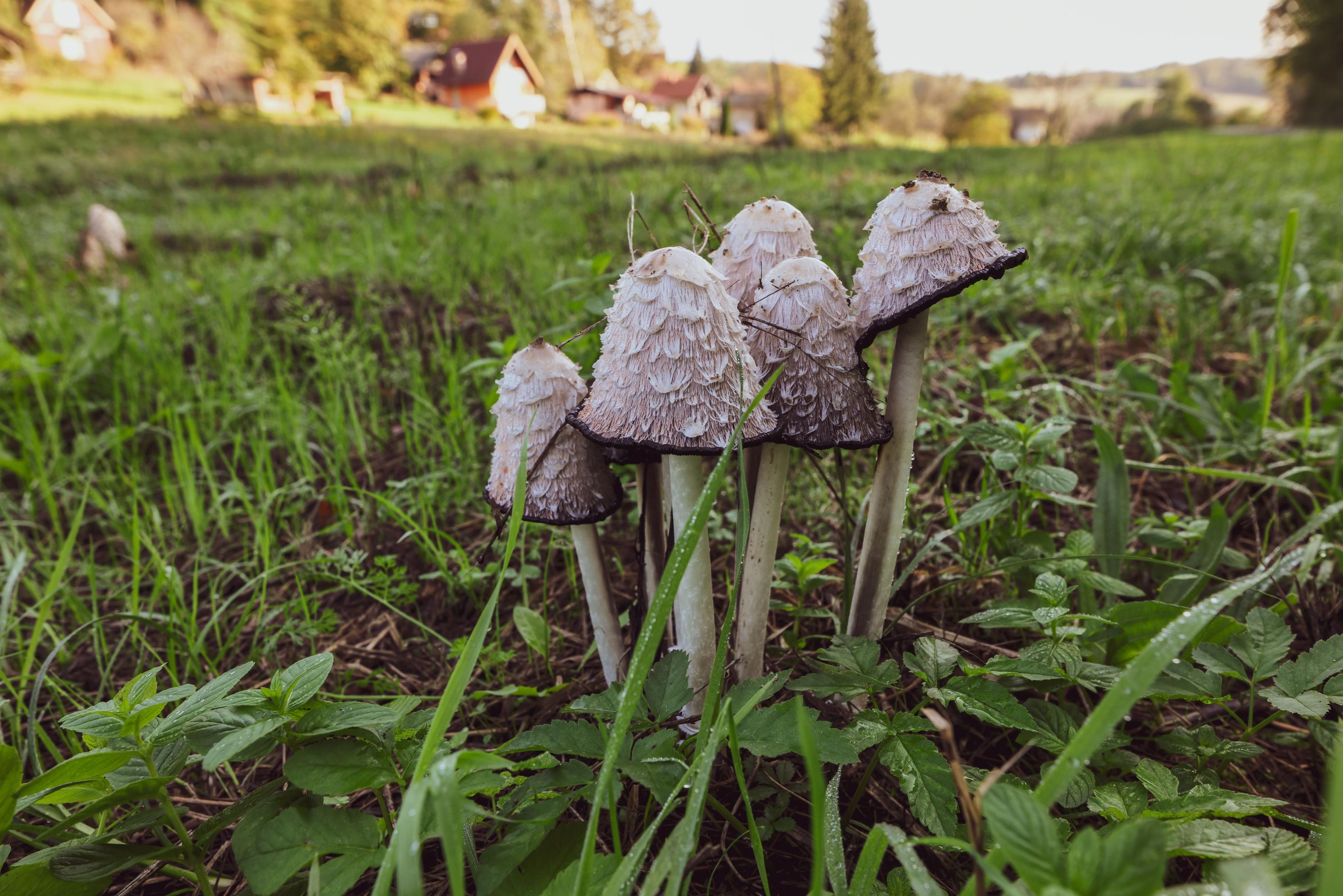
Its primary biological function is to produce and release spores, allowing the fungus to reproduce and spread.
Different mushroom species produce fruiting bodies with distinctive shapes and characteristics.
For example:
-
Turkey tail (Trametes versicolor): Forms thin, colorful, fan-shaped structures that grow in overlapping layers on wood (Camp and Bal, 2022).
-
Reishi (Ganoderma lucidum): Often develops a reddish-brown, glossy fruiting body (Babu and Subhasree, 2008).
-
Lion's mane (Hericium erinaceus): Produces a distinctive white structure with cascading, icicle-like spines (Bacha et al., 2018)
-
Shiitake (Lentinula edodes): Produces the familiar capped mushroom used in cooking (Jones, 1998).
-
Agaricus species: Includes mushrooms studied for their naturally occurring polysaccharides and other bioactive compounds (Zhao, 2020).
These fruiting bodies contain a variety of naturally occurring substances, including polysaccharides, beta-glucans, and other compounds that vary according to the species.
For supplement manufacturers, fruiting bodies can provide a source of these constituents. They are usually dried and ground into a powder or processed into extracts designed to concentrate particular compounds.
However, the nutritional and chemical composition of a mushroom depends on more than its visible structure. Species, growing conditions, maturity, harvesting practices, and processing methods can all influence the final ingredient.
Understanding what a fruiting body is provides a useful starting point for evaluating mushroom supplements for dogs.
Fruiting Bodies vs. Mycelium: What's the Difference?
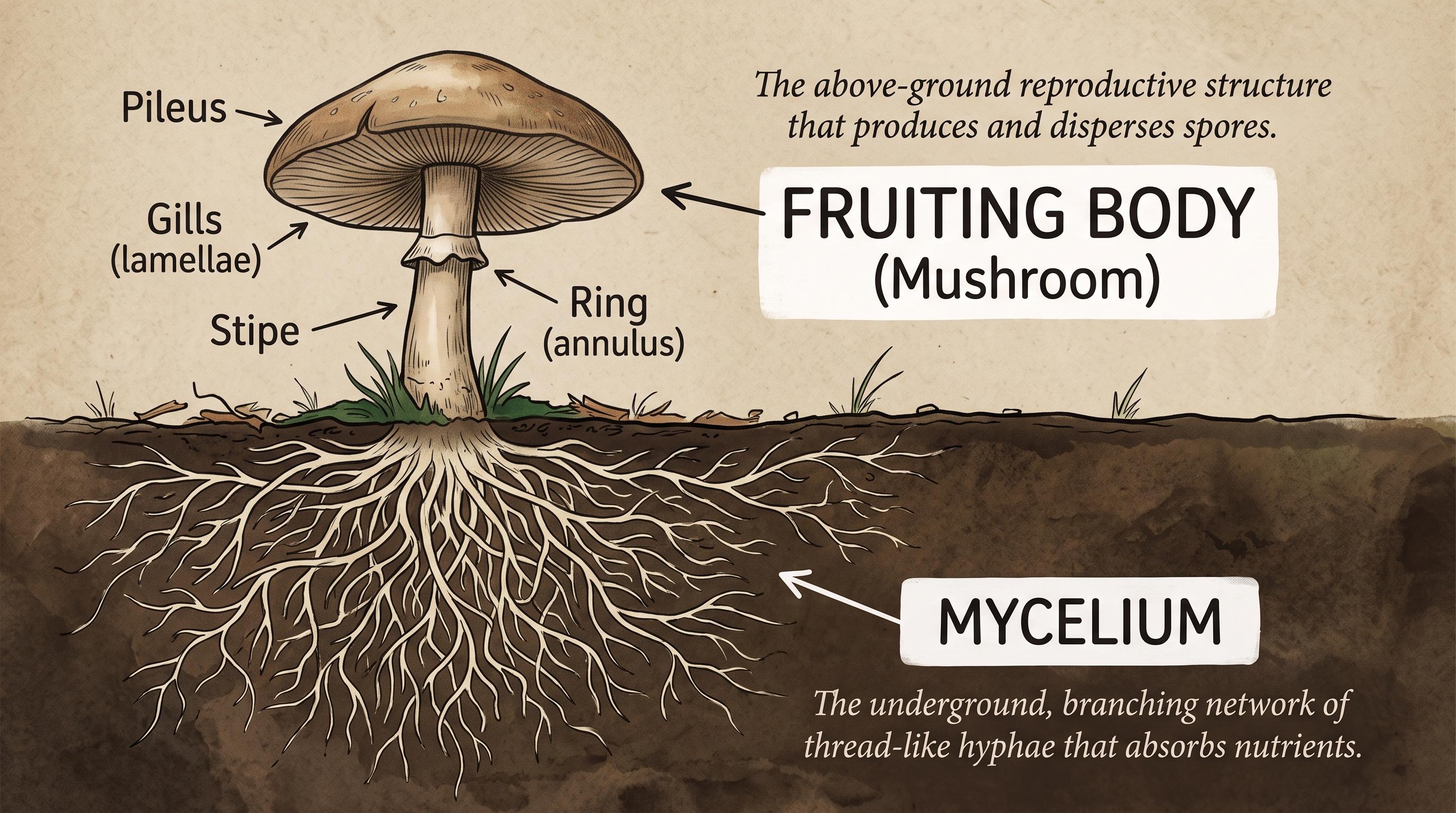
To understand why fruiting bodies matter, it is important to distinguish them from mycelium, another essential part of a fungus.
Mycelium is a network of microscopic, root like structures called hyphae. It represents the vegetative portion of the fungus and allows it to grow through its environment, absorb nutrients, and develop.
In nature, mycelium may spread through soil, decaying wood, or other organic material. Under appropriate conditions, the fungus may eventually produce fruiting bodies.
Both structures are important, but they are not identical.
Fruiting bodies
Fruiting bodies are the reproductive structures of fungi. Depending on the species, they can contain beta-glucans and other polysaccharides, as well as additional compounds of interest. They are also generally richer in vitamins and minerals than mycelium.
When used in supplements, fruiting bodies may be harvested separately from the material on which they grew. This can make it easier to identify the source material and avoid unwanted carryover of the cultivation substrate.
Mycelium
Mycelium is the growing network of fungal cells that develops through a substrate.
Some manufacturers cultivate mushroom mycelium in liquid fermentation systems, while others grow it on solid substrates such as grains like rice or other organic materials.
In products made using solid state cultivation, the harvested material may contain both fungal biomass and residual substrate. When grain is used, some of that substrate may remain in the finished product as starch, while separately harvested fruiting body ingredients typically contain little to no starch filler from grain.
This matters because the amount of actual fungal material and the concentration of particular compounds can vary considerably between products. In general, fruiting body supplements contain higher concentrations of bioactive compounds than mycelium based products. Commonly cited ranges put fruiting bodies around 30-40% beta-glucans, while mycelium is often closer to 5-10%, though this varies by species and processing. Grain-grown material can also be cheaper to produce, which is one reason product composition deserves a closer look (Vetter, 2023).
However, mycelium is not inherently inferior to fruiting bodies. Mycelium can contain valuable fungal compounds, and its composition depends on the species, cultivation conditions, substrate, and processing method. The important question is not simply which structure was used, but what the finished supplement actually contains.
For dog owners, a clearly labeled product that identifies its mushroom source and provides third party testing offers the strongest basis for verifying quality and composition.
Why Do Fruiting Bodies Matter in Mushroom Supplements for Dogs?
Fruiting bodies are important because they can provide a source of mushroom derived compounds that are being investigated for their potential biological effects and potential health benefits (Bak et al., 2014; Vetter, 2023).
For dogs, one of the most relevant areas of interest is immune function. Different species may also offer unique benefits; for example, Lion's Mane is studied more for memory and cognitive function than for immune support, so the expected benefits can vary by mushroom.
However, it is important to distinguish between what researchers know about mushroom chemistry, what studies suggest about biological activity and health benefits, and what has actually been demonstrated in clinical veterinary patients, since scientific research in dogs is still more limited than the broader mushroom literature.
Fruiting Bodies Can Provide Beta-Glucans
Beta-glucans are naturally occurring polysaccharides and a type of soluble fiber found in fungal cell walls and certain other biological sources, and both soluble fiber and beta-glucans are widely studied for their importance to human health as well as animal nutrition. Mushroom beta-glucans are of particular interest because some structures can interact with receptors involved in immune recognition.
The immune system uses a complex network of cells, signaling molecules, and receptors to recognize potential threats and coordinate responses. Certain beta-glucans can interact with this network, making them an important subject of research into immune modulation.
Mushroom fruiting bodies can be a source of beta-glucans, although concentrations vary considerably among species and products. Mycelium can also contain beta-glucans, but if grown in grain will also contain a large percentage of alpha-gluccan from the grain itself. (Bak et al., 2014; Vetter, 2023).
For dogs, the potential relevance of these compounds is an important reason mushroom supplements have attracted attention in veterinary nutrition and integrative veterinary medicine.
Research has explored whether mushroom derived compounds may influence immune responses, inflammation, and other biological processes. However, the effects depend on the particular beta-glucan, its structure, the dose, and the formulation being studied (Han et al., 2020).
It is also important to recognize that beta-glucans from different sources are not interchangeable. Mushroom beta-glucans, yeast beta-glucans, and cereal beta-glucans can differ in their structures and biological properties (Novak and Vetvicka, 2008). Therefore, a supplement's total beta-glucan content is useful information, but it does not tell the entire story about its biological activity or clinical effectiveness.
For pet owners, this means that a product's beta-glucan claims should ideally be supported by appropriate laboratory testing, with third-party testing helping verify quality and potency, rather than marketing language alone. You should look at where the beta-glucans are from on the product label. If not disclosed, reach out to the company and ask what part of the mushroom is used, what it is grown on and how it's harvested.
Fruiting Bodies Contain Other Compounds of Scientific Interest
Beta-glucans are not the only compounds found in medicinal mushrooms.
Depending on the species, fruiting bodies may also contain other polysaccharides, triterpenes, ergothionine, B vitamins, and additional naturally occurring constituents (Bak et al., 2014).
For example, reishi mushrooms are traditionally known as the Mushroom of Immortality, and reishi contains triterpenes that have been investigated for a range of biological activities (Cor et al., 2018). Different species are associated with different potential health benefits, such as immunity with reishi and turkey tail or cognitive benefits with Lion’s Mane. Turkey tail contains polysaccharides that have been studied for their potential immunological effects (Abascal and Yarnell, 2007). Some species are also discussed for gut health support because fungal polysaccharides may influence the gastrointestinal microbiome and immune function. Fruiting body extracts are also often valued for immunomodulation and antioxidants (Zhao et al., 2020; Ustun, 2018).
These compounds are one reason researchers continue to investigate medicinal mushrooms as potential ingredients in veterinary supplements. However, different compounds may be present in different concentrations depending on the fungal structure, growing conditions, and preparation method.
A fruiting body powder and an extract made from the same mushroom may therefore have different chemical profiles. It is also important not to assume that every fruiting body product contains the same beneficial compounds in the same amounts. The presence of a particular mushroom species does not automatically establish the concentration of any individual ingredient.
Fruiting Bodies Can Offer Greater Transparency About the Source Material
One of the practical advantages of choosing a clearly labeled fruiting body supplement is that pet owners can more easily identify which fungal structure was used. This is particularly useful when comparing products that provide limited information about their ingredients, especially in a supplement industry where companies may disclose very different levels of sourcing and testing detail.
For example, a label that specifies the mushroom species, identifies the fruiting body as the source material, and lets you check for actual mushroom content versus mycelium on grain tells consumers more important information than just listing the ingredients.
Transparency is important because the finished product's composition can vary according to the cultivation and manufacturing process. When a manufacturer also provides information about extraction methods, beta-glucan testing, and quality control procedures, consumers have more information with which to evaluate the product.
For pet owners interested in supporting their dog's overall wellness, this level of detail can help distinguish products with documented characteristics from those relying primarily on broad marketing claims.
Separately Harvested Fruiting Bodies Can Avoid Residual Grain in Certain Products
Some mushroom supplements use mycelium grown on grain or other solid substrates. Depending on how the material is harvested and processed, residual substrate may remain in the final ingredient.
In grain grown products, this can mean that some of the powder consists of starch rather than fungal biomass. Starch is not inherently harmful to dogs. It is a normal dietary carbohydrate. The concern is whether the finished supplement contains the amount and type of mushroom derived material that consumers expect.
If substantial substrate remains in a product, it may dilute the concentration of certain mushroom constituents per gram. Fruiting body ingredients are often more expensive to cultivate than grain grown alternatives, which are typically cheaper to produce, but they may also offer higher potency per gram.
Fruiting bodies harvested separately from their growth substrate can avoid this particular issue.
However, this does not mean that all mycelium products contain significant amounts of grain, or that all fruiting body products are automatically concentrated or potent.
The cultivation method, harvesting process, and analytical results are what ultimately help clarify the composition of the finished ingredient.
For this reason, it is worth looking beyond the words "fruiting body" and asking how the manufacturer verifies the quality of its product, since this is a recurring issue across the broader mushroom supplement market.
Fruiting Body Powder vs. Mushroom Extracts for Dogs
Another important consideration is whether a supplement contains whole mushroom powder or a mushroom extract. These are different preparations, and neither is automatically superior in every situation.
Whole fruiting body powder
Whole mushroom powder is generally made by drying and grinding the fruiting body. It retains a broad range of the original mushroom's constituents, although the amounts of individual compounds vary according to the species and processing method.
Because it is less concentrated than some extracts, the quantity of mushroom powder needed to deliver a particular amount of a constituent may be greater.
The actual composition still needs to be evaluated, rather than assumed from the preparation method.
Fruiting body mushroom extract
Extracts are produced by processing mushroom material to recover selected constituents. Water extraction can recover many water soluble compounds, including certain polysaccharides. Other extraction methods may be used for constituents with different solubility characteristics.
Some manufacturers use multiple extraction steps to obtain a broader range of compounds.
An extract may provide a different concentration and chemical profile compared with whole mushroom powder (McCleary and Draga, 2016).
For dog owners, it is worth asking whether the manufacturer explains its extraction method and provides analytical results for the finished ingredient (% beta glucan level for example).
Quality Matters When Choosing Mushroom Supplements for Dogs
Mushroom supplements are an interesting area of veterinary nutrition research, particularly because certain mushroom derived compounds are being studied for a range of potential health benefits. Fruiting bodies are an important consideration because they provide a recognizable source of beta-glucans and other compounds of scientific interest (Bak et al., 2014). They may also help avoid residual substrate in products where the fruiting bodies are harvested separately from the growing material. Just keep in mind mycelium should not automatically be dismissed as an inferior ingredient, it matters how the mycelium is grown and harvested. Generally speaking, stay away from mycelium products grown on grain. If fruiting body products are grown on grain but separated from both grain and mycelium, these will have a better beta glucan concentration.
The quality of a mushroom supplement depends on its species identification, cultivation and processing methods, measured composition, purity, third party testing, certified organic ingredients, and the evidence supporting its intended use.
For pet owners, transparency is essential. Look for products that clearly identify their ingredients, provide relevant analytical testing, and offer guidance appropriate for dogs.
By understanding the difference between fruiting bodies and mycelium, learning what beta-glucan testing can tell you, and discussing supplementation with your veterinarian, you can make a more informed decision about the products you introduce into your dog's wellness routine; extra caution is warranted if your dog has a medical condition or is taking medication.
References
Abascal, K., & Yarnell, E. (2007). A turkey tails polysaccharide as an immunochemotherapy agent in cancer. Alternative and Complementary Therapies, 13(4), 178-182.
Babu, P. D., & Subhasree, R. S. (2008). The sacred mushroom “Reishi”-a review. American-Eurasian Journal of Botany, 1(3), 107-110.
Bacha, S. A. S., Ali, S., Li, Y., Rehman, H. U., Farooq, S., Mushtaq, A., ... & Aslam, S. M. (2018). Lion’s mane mushroom; new addition to food and natural bounty for human wellness: A review. Int. J. Biosci, 13, 396-402.
Bak, W. C., Park, J. H., Park, Y. A., & Ka, K. H. (2014). Determination of glucan contents in the fruiting bodies and mycelia of Lentinula edodes cultivars. Mycobiology, 42(3), 301-304.
Camp, A., & Bal, T. (2022). The Turkey tail mushroom and its many look-alikes.
Cör, D., Knez, Ž., & Knez Hrnčič, M. (2018). Antitumour, antimicrobial, antioxidant and antiacetylcholinesterase effect of Ganoderma lucidum terpenoids and polysaccharides: A review. Molecules, 23(3), 649.
Han, B., Baruah, K., Cox, E., Vanrompay, D., & Bossier, P. (2020). Structure-functional activity relationship of Beta-glucans from the perspective of immunomodulation: A mini-review. Frontiers in Immunology, 11, 658.
Jones, K. (1998). Shiitake: a major medicinal mushroom. Alternative and complementary therapies, 4(1), 53-59.
Lee, W. Y., Park, E. J., Ahn, J. K., & Ka, K. H. (2009). Ergothioneine contents in fruiting bodies and their enhancement in mycelial cultures by the addition of methionine. Mycobiology, 37(1), 43-47.
McCleary, B. V., & Draga, A. (2016). Measurement of Beta-Glucan and Alpha-Glucan in Mushroom Preparations and Dietary Supplements. Journal of AOAC International, 99(2), 364–373.
Novak, M., & Vetvicka, V. (2008). Beta-Glucans, history, and the present: Immunomodulatory aspects and mechanisms of action.
Üstün, N. Ş., Bulam, S., & Pekşen, A. (2018). The use of mushrooms and their extracts and compounds in functional foods and nutraceuticals. Türkmen, A.(ed.), 1, 1205-1222.
Vetter, J. (2023). The mushroom glucans: molecules of high biological and medicinal importance. Foods 12(5): 1009.
Zhao, R. (2020). Species of Agaricus section Agaricus from China. Phytotaxa, 452(1), 001-018.
Zhao, S., Gao, Q., Rong, C., Wang, S., Zhao, Z., Liu, Y., & Xu, J. (2020). Immunomodulatory effects of edible and medicinal mushrooms and their bioactive immunoregulatory products. Journal of Fungi, 6(4), 269.
Related Posts

New World Screwworm in the US
Screwworm is the larval stage of the New World screwworm fly, a parasite that lays eggs in wounds and whose maggots feed on living tissue, causing painful and sometimes life threatening infestations in pets and livestock. For decades, th...

Puppy Pathogens: Parvo and Distemper
Bringing home a new puppy is an exciting milestone filled with cuddles, playtime, and unforgettable memories. But parvovirus (parvo) and distemper are highly contagious, potentially fatal viral diseases in dogs (especially puppies) that ...

What Soccer Did for Dogs in Iceland
Without the tenacity of a soccer player, dogs could very well have disappeared from Iceland. This small country— a kind-hearted nation and so deserving in the recent Euro football tournament—no longer wanted dogs. Dogs were banned from t...


Leave a comment